文章詳情頁
SQL Server使用PIVOT與unPIVOT實現行列轉換
瀏覽:265日期:2023-03-06 14:25:24
一、sql行轉列:PIVOT
1、基本語法:
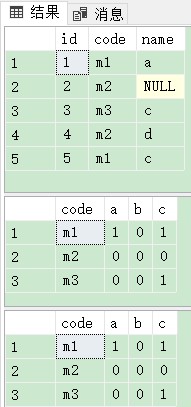
create table #table1 ( id int ,code varchar(10) , name varchar(20) );goinsert into #table1 ( id,code, name ) values ( 1, "m1","a" ), ( 2, "m2",null ), ( 3, "m3", "c" ), ( 4, "m2","d" ), ( 5, "m1","c" );goselect * from #table1;--方法一(推薦)select PVT.code, PVT.a, PVT.b, PVT.c from #table1 pivot(count(id) for name in(a, b, c)) as PVT;--方法二with P as (select * from #table1)select PVT.code, PVT.a, PVT.b, PVT.c from Ppivot(count(id) for name in(a, b, c)) as PVT;drop table #table1;
結果:
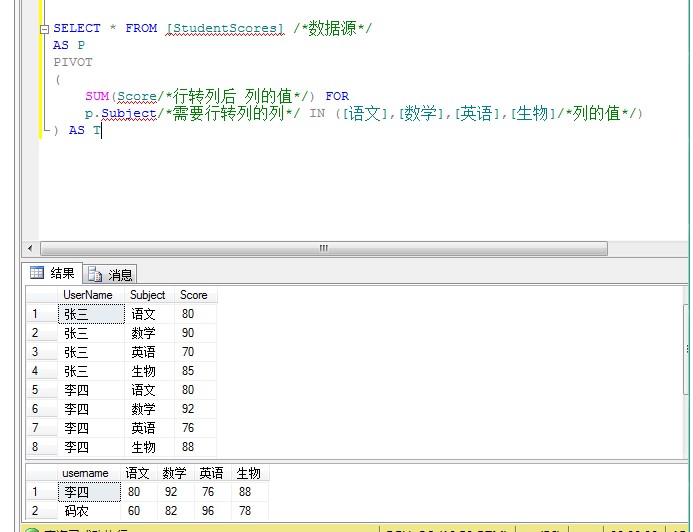
2、實例:
3、傳統方式:(先匯總拼接出所需列的字符串,再動態執行轉列)
先查詢出要轉為列的行數據,再拼接字符串。
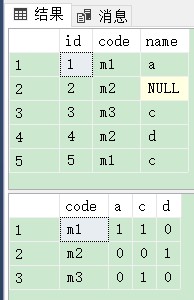
create table #table1 ( id int ,code varchar(10) , name varchar(20) );goinsert into #table1 ( id,code, name ) values ( 1, "m1","a" ), ( 2, "m2",null ), ( 3, "m3", "c" ), ( 4, "m2","d" ), ( 5, "m1","c" );goselect * from #table1;declare @strCN nvarchar(100);select @strCN = isnull(@strCN + ",", "") + quotename(name) from #table1 group by name ;print @strCN --‘[a],[c],[d]"declare @SqlStr nvarchar(1000);set @SqlStr = N"select * from #table1 pivot ( count(ID) for name in (" + @strCN + N") ) as PVT";exec ( @SqlStr );drop table #table1;結果:
二、sql列轉行:unPIVOT:
基本語法:
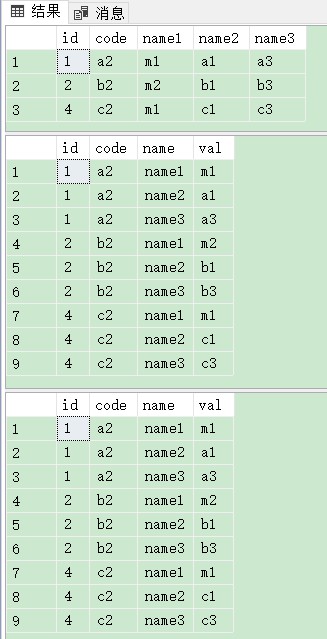
create table #table1 (id int,code varchar(10),name1 varchar(20),name2 varchar(20),name3 varchar(20));goinsert into #table1(id, name1, name2, code, name3)values(1, "m1", "a1", "a2", "a3"), (2, "m2", "b1", "b2", "b3"), (4, "m1", "c1", "c2", "c3");goselect * from #table1;--方法一select PVT.id, PVT.code, PVT.name, PVT.val from #table1 unpivot(val for name in(name1, name2, name3)) as PVT;--方法二with P as (select * from #table1)select PVT.id, PVT.code, PVT.name, PVT.val from P unpivot(val for name in(name1, name2, name3)) as PVT;drop table #table1;
結果:
實例:
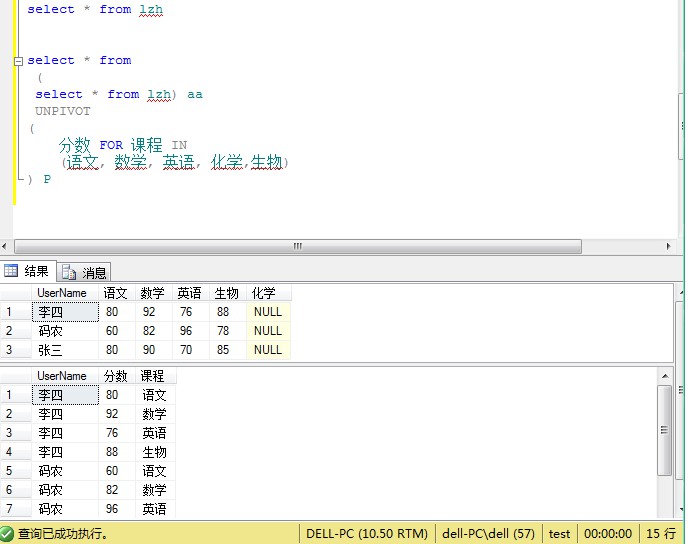
到此這篇關于SQL Server使用PIVOT與unPIVOT實現行列轉換的文章就介紹到這了。希望對大家的學習有所幫助,也希望大家多多支持。
標簽:
MsSQL
相關文章:
1. SQL Server 2005使用基于行版本控制的隔離級別初探(1)2. SQL Server如何插入數據示例代碼3. SQL SERVER偏移函數(LAG、LEAD、FIRST_VALUE、LAST _VALUE、NTH_VALUE)4. SQL Server數據庫生成與執行SQL腳本詳細教程5. SQL Server使用CROSS APPLY與OUTER APPLY實現連接查詢6. SQL Server還原完整備份和差異備份的操作過程7. 用SQL Server為Web瀏覽器提供圖像(二)(轉)8. 安裝SQL Server 2005時出現計數器錯誤9. 八步解決ACCESS自動編號問題(將SQL SERVER 2000數據庫,轉換為ACCESS數據庫)10. SQL SERVER 數據類型詳解
排行榜
 網公網安備
網公網安備